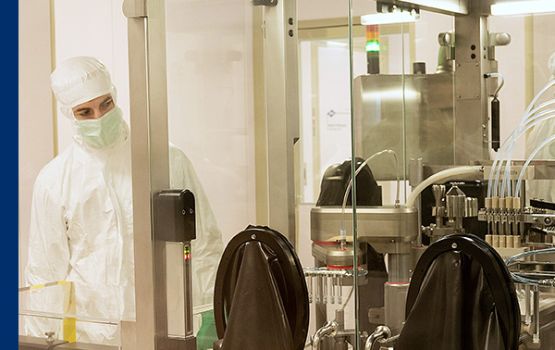
On the occasion of the International Day of Women and Girls in Science, IBSA renews its commitment to promoting inclusion and valuing the female contribution in scientific and technological fields.
Others
International Day of Women and Girls in Science: Cultivating Female Talent for the Future of Innovation
THE CONTEXT: A CRUCIAL CHALLENGE AND OPPORTUNITY
Despite progress in recent decades, women are still significantly underrepresented in STEM careers at global and European levels. While worldwide, less than a third of researchers are women, and only a small percentage of these reach leadership positions or comparable visibility to their male colleagues¹, in Europe, only about 34% of people graduated in STEM subjects are women². This gap deepens in the professional world: despite a growing number of women obtaining degrees in scientific subjects, many do not then embark on a career in these fields or, for those who do, face significant barriers to progression. For example, in the European academic landscape, women occupy only 26% of grade A positions, the highest level².
According to JA Europe³, even in educational phases – despite girls often achieving excellent academic results in scientific disciplines – gender stereotypes persist that can discourage them from pursuing STEM pathways from a young age. It is not just a matter of equity, but represents a significant loss of innovative potential and economic growth for the entire society. JA Europe also believes that the full inclusion of women in STEM sectors could generate a significant increase in European GDP and help bridge the talent gap predicted for the coming years.
IBSA FOUNDATION FELLOWSHIPS: FEMALE TALENT AT THE FOREFRONT OF RESEARCH
Firmly believing that eliminating this gap is essential for addressing the challenges of the future and for stimulating richer and more diverse innovation, IBSA is committed to cultivating talent and valuing the female contribution in scientific research also through the projects of IBSA Foundation.
The IBSA Foundation Fellowships, now in their 12th edition, are a concrete example of this.
Out of approximately 1650 research projects received since the project's launch in 2013 to date (excluding data for the 2025 edition, which closed on January 31st), 64% have been submitted by female researchers. Even more significant is the data relating to projects that have been awarded the scholarship: approximately 60% of IBSA Foundation Fellowships have been granted to female researchers. These figures demonstrate broad female participation and further attest to the scientific value, originality, and clinical relevance of the proposals put forward by female researchers, who continue to distinguish themselves through quality and innovation.
#SHEDIDIT: GIVING VOICE TO EXTRAORDINARY STORIES OF SCIENCE
To further celebrate women's contributions to science and inspire new generations, on the social media channels of IBSA Group (LinkedIn, Instagram, Facebook, and YouTube), a new series has been launched, guided by the hashtag #SheDidIt.
An initiative to give a voice to stories of women scientists and technologists, some well-known, others unjustly forgotten, who with their ingenuity, perseverance, and passion have changed the course of history and knowledge.
From the mathematical genius of Hypatia, to the revolutionary discoveries of Marie Curie and Rosalind Franklin, through to the essential contribution of Dorothy Crowfoot Hodgkin and many others, the #SheDidIt series aims to illuminate exemplary paths and encourage girls and young women to pursue their aspirations in the scientific field, demonstrating that there are no limits to female talent and innovation.
Follow us on our channels for the first story of the #SheDidIt series!
¹ UNESCO, Science Report: The Race Against Time for Smarter Development (2021) https://unesdoc.unesco.org/ark:/48223/pf0000377433
² European Commission, Data and analysis on female participation in STEM, part of the Digital Education Action Plan. Specific data is based on recent Eurostat statistics (updates available as of 2021-2022). For data on grade A positions: European Commission, She Figures 2021 https://doi.org/10.2777/06090
³ JA Europe, "Why investing in girls in STEM is essential for a thriving future", 11 February 2022. Available at: https://jaeurope.org/why-investing-in-girls-in-STEM-is-essential-for-a-thriving-future/